

The Package Is Not the Product
Every layer of packaging cost money. That cost doesn’t disappear — it transfers into the price you pay and out of the food itself. Someone has to do the math. We did.
─────────────────────────
There is a moment I keep returning to.
I order a sandwich from a place I once trusted. It arrives wrapped in thick glossy branded paper, placed inside a printed sandwich box, sealed with a sticker bearing the logo, then placed inside a paper bag bearing another logo, sealed at the top with yet another sticker. I unwrap all of this — four layers of packaging, each one designed, printed, sourced, and paid for — and I hold the sandwich.
It is smaller than I remember. The bread has changed. The filling is lighter. Something is missing that used to be there.
I throw the packaging in the garbage before I've taken a single bite.
And I find myself doing the math.
The Math Nobody Does Out Loud
Every layer of that packaging cost money. The thick glossy paper, the printed box, the branded bag, the stickers — none of it is free. Someone designed it. Someone sourced it. Someone pays per unit every time an order goes out.
That cost doesn't disappear. It transfers. It transfers into the price you pay, and it transfers out of the food itself — because something has to give when margins are squeezed and the packaging budget keeps rising.
What gives is almost always the filling. The quality of the ingredient. The generosity of the portion. The care that used to go into what was inside before so much attention went to what was outside.
You paid for the packaging. You ate less for it. And you threw the packaging in the garbage before you finished chewing.
I am not suggesting that presentation doesn't matter. I am suggesting that somewhere along the way, presentation became the product — and the actual product became secondary to it.
This Has Happened Before
The food industry did not invent this shift. It borrowed it.
Think about what social media did to beauty.
For generations, beauty was personal, varied, cultural, imperfect. Then came the platforms, the filters, the influencers, the before-and-after transformations, the seamless faces that exist only in edited photographs. A standard emerged — not an honest standard born of diversity and time, but a manufactured one, engineered for engagement, optimized for the scroll. And suddenly, real faces — with their asymmetry and texture and the evidence of actual living — began to look wrong. Not because they were wrong. Because the algorithm had normalized something artificial and made the natural seem like a flaw.
The food industry followed the same path with devastating efficiency.
Now you renovate not to improve the experience of eating, but to create a backdrop worth photographing. You source designer plates not because food tastes better on them, but because they perform better in a flat lay. You hire a branding company — the same one handling a dozen other businesses — and receive a visual identity that is memorable in the way all template-built identities are memorable: briefly, and without depth. The colors are assigned. The fonts are selected from a shortlist. The result is flashy, cohesive, and entirely interchangeable with the place that opened three doors down.
Much like the supermodels on the covers of the magazines that told women who they should be — they all look alike.
The Scripted Experience
The opening is covered. The influencers are invited. The celebrities arrive. The interviews happen — scripted, framed, delivered to camera with rehearsed enthusiasm. The PR company sends the recap. The views accumulate.
And then someone actually sits down to eat.
The food arrives in its magnificent packaging. Photographs are taken before anything is touched — fifteen minutes of documentation, the food growing cold on the table while the angles are perfected. The photographs are uploaded. The experience is narrated to followers. Then the complaint arrives that the food is cold.
Somewhere in this sequence, the eating became the least important part of the meal.
I think about the places I visited traveling. The ones that stayed with me — not the names, not the decor, not the packaging — but the food itself, made by someone who had been making the same thing for decades. A small place, perhaps poorly maintained by current standards. A cook in a worn apron, consumed entirely by what was happening on the stove, indifferent to how it photographed. The kind of mastery that accumulates slowly, invisibly, in the hands and the judgment of someone who has chosen craft over spectacle.
If you encountered a hair in that food today, you would leave a one-star review and never return. The algorithm would record your disappointment. The place would suffer for it.
Meanwhile, the beautifully packaged, influencer-documented, PR-covered sandwich you photographed before eating sits cold in your memory, distinguished mainly by its box.
The Consumer's Role
This is where it gets uncomfortable — because the industry didn't do this alone.
We trained it.
Every time we chose the Instagram-worthy place over the quietly excellent one, we sent a signal. Every time we photographed the packaging before tasting the food, we told the industry what we valued. Every time we dismissed a genuine place because its walls weren't photogenic enough, we moved the incentive further away from quality and closer to performance.
The consumer who has been conditioned by artificial standards — in beauty, in food, in experience — begins to look at genuine things with suspicion. The handmade label that isn't perfectly typeset. The wrap that is honest rather than theatrical. The place that spent its money on the ingredient rather than the vessel.
You start to judge food by its cover. You start to judge a restaurant by its furniture. And the places that understood this before the places that didn't began spending accordingly — on the cover, on the furniture, on everything except what you actually put in your mouth.
Where the Line Is
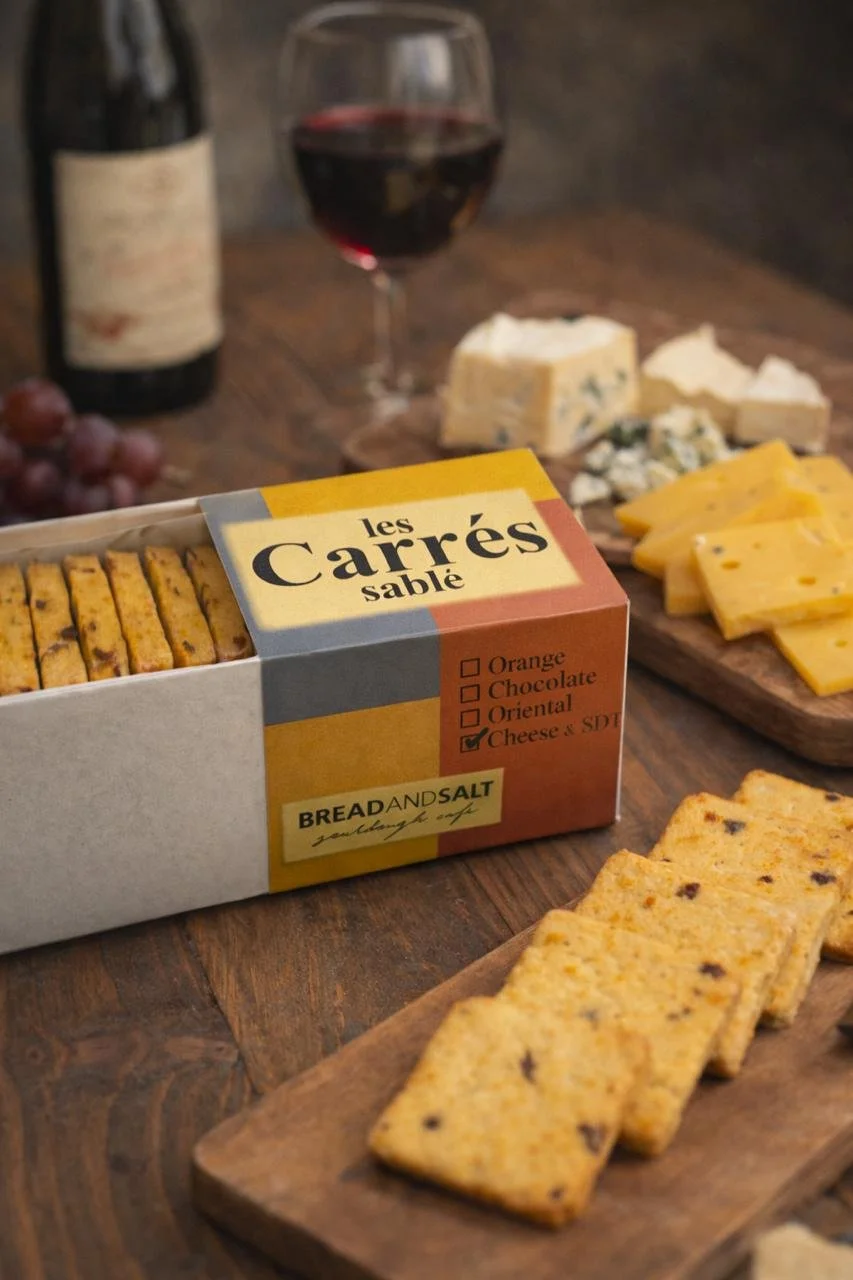
I am not innocent of branding. Bread and Salt has a logo. We have packaging. We made deliberate choices about how we present ourselves to the world.
But the line is clear to me, and I drew it early.
I designed what I could myself. I found a small local supplier and chose craft paper, recycled materials, single color printing. I kept the cost low deliberately — not because I couldn't spend more, but because every lira spent on the bag is a lira not spent on the flour, the meat, the starter I have been feeding since 2013. Our packaging exists to protect what's inside and honestly identify where it came from. Nothing more.
Branding should represent. It should not perform. It should tell you who made this and why it matters — not simulate a value that the food itself cannot deliver.
The Gold Standard
How would you rate a gold ounce?
By the purity and quality of the gold — or by the box it arrived in?
The box is disposable. The gold is the point.
In food, the gold is what you taste. What stays with you after the packaging is in the garbage and the photograph is archived and the influencer has moved on to the next opening.
An artist of his trade. A master consumed by the outcome of his endeavor rather than the vessel it travels in. That is what food was supposed to be. That is what some of us are still trying to make it.
Sourfaux: What's Really in Your Sourdough Loaf
Sourdough is on every menu in Beirut right now. Some of it is real. A lot of it isn’t. Here’s how to tell the difference.
By Alain Bejjani, Bread and Salt Sourdough Cafe
──────────────────────────────
Sourdough is having a moment. It's on every menu, every delivery app, every café sign in Beirut. Artisanal. Natural. Fermented. Healthy.
Some of it is. A lot of it isn't.
There's a word circulating in baking communities that describes the latter perfectly: sourfaux. Bread that wears the sourdough label but carries none of its substance. It looks the part. It's priced accordingly. And it's becoming increasingly difficult to tell apart from the real thing — unless you know what you're actually looking for.
After twelve years of making real sourdough, I think it's time to talk about this honestly.
What Real Sourdough Actually Is
Real sourdough begins with a levain — a live culture of wild yeast and bacteria, created from nothing but flour and water, maintained through daily feeding, and kept alive indefinitely by the baker who tends it.
Our levain was born in 2013. We have fed it every single day since. It has never been replaced, never been restarted, never had commercial yeast introduced to give it a boost. Twelve years of the same culture, the same relationship, the same daily ritual.
This is not a romantic detail. It matters technically.
A mature, well-maintained levain produces a fermentation that transforms the dough from the inside — breaking down gluten structures, reducing phytic acid, developing complex organic acids that create depth of flavor no additive can replicate. The process takes time because biology takes time. It cannot be rushed without losing the very thing that makes it valuable.
The result is bread that tastes different, keeps differently, and behaves differently in your body. Lower glycemic impact. Better digestibility. A depth of flavor that stays with you. That's real sourdough. It's specific. It's measurable. It's not a label.
What Sourdough Is Not
Here's where it gets uncomfortable.
Walk into almost any bakery today and you'll find bread described as sourdough that was leavened primarily — or entirely — with commercial yeast. Sometimes a small amount of starter is added for flavor. Sometimes sourdough flavoring is introduced as an ingredient. The bread rises fast, looks beautiful, and carries a price point that suggests craft.
This is sourfaux. And the people selling it are not always being dishonest in an obvious way — they're exploiting a gap in public knowledge that the industry has been slow to close.
The more sophisticated version involves fermentation time claims. You'll see "48 hour fermentation" or "60 hour cold fermentation" or even "78 hour slow fermented" on menus and packaging. The numbers sound serious. They imply patience and process.
Here's what those numbers often actually mean: the dough was placed in a refrigerator for that duration.
A refrigerator slows fermentation almost to a stop. Cold retarding dough is a legitimate baking technique — we use it ourselves — but it is not the same as active fermentation. Dough sitting in a fridge at 4 degrees is largely hibernating, not actively fermenting. The biological transformation that makes sourdough what it is happens at warmer temperatures, under controlled conditions, with an active and healthy levain driving the process.
A well-managed, properly temperature-controlled fermentation reaches optimal results in approximately 24 hours. Additional time beyond that develops sourness and complexity of flavor — a valid creative choice — but it does not mean the bread is more "sourdough" than a loaf fermented for 24 hours. The number of hours in a cold fridge is not a quality indicator. It has become a marketing one.
How to Tell the Difference
You don't need a chemistry degree. Your senses are enough.
Taste. Real sourdough has complexity — a mild tang, a depth that lingers. Sourfaux often tastes flat underneath the crust, or has an artificial sharpness from added flavoring that doesn't quite sit right.
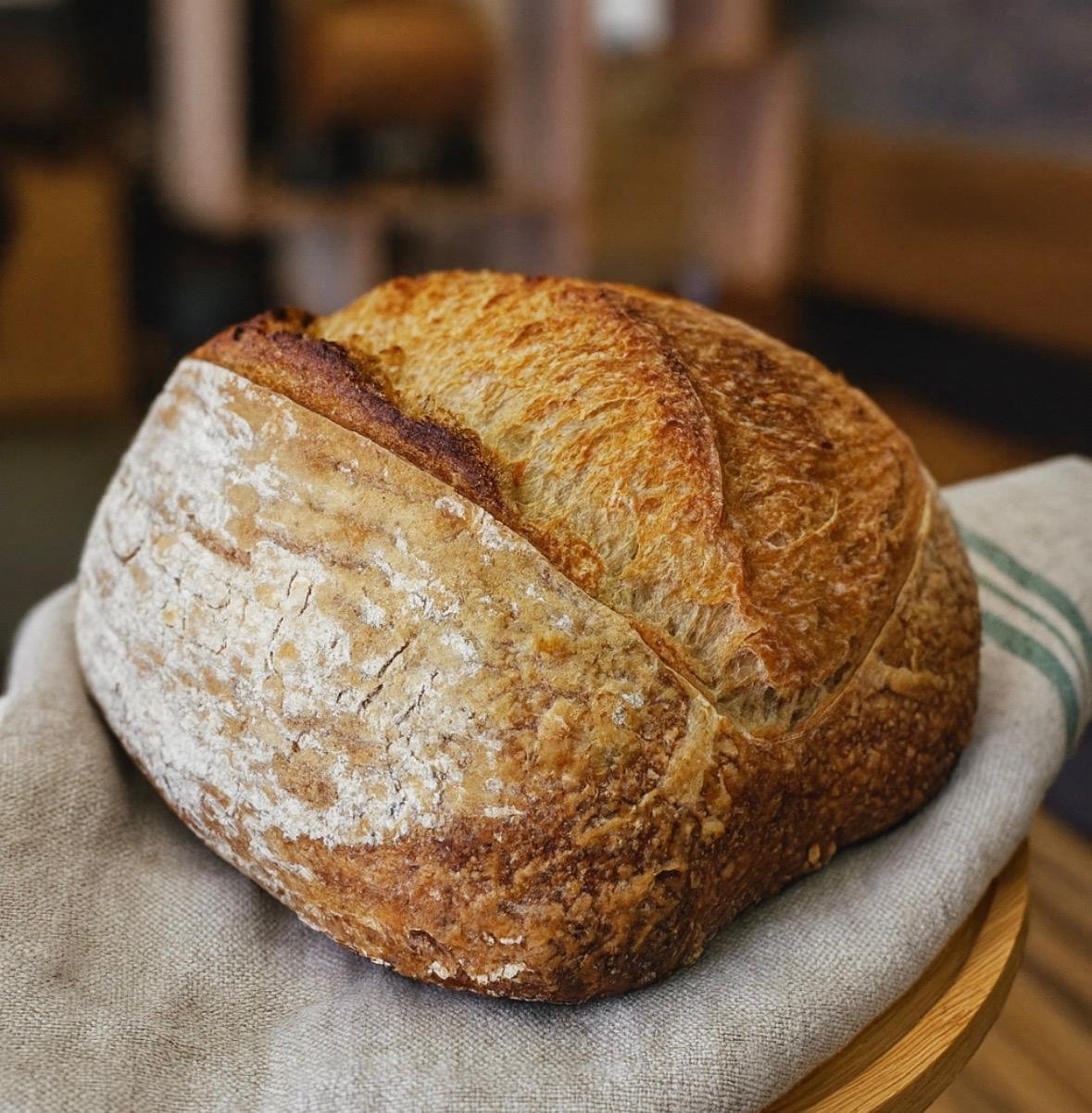
Crust. A properly fermented sourdough develops a crust with structural integrity — it shatters when you cut it and stays crisp for hours. Commercial yeast bread softens quickly.
Crumb. The interior of real sourdough has an irregular, open structure — uneven holes, a slightly translucent quality to the cell walls. Uniform, tight crumbs suggest a faster process.
How it keeps. Real sourdough stays good for days. The organic acids produced during fermentation act as natural preservatives. If your "sourdough" goes stale or moldy in 24 hours, ask questions.
How you feel after eating it. People who switch to real sourdough consistently report feeling lighter, less bloated, more satisfied with less. The digestibility difference is real and documented.
Why We Never Cut Corners
Not because we're rigid. Because the corners are the point.
The slow process, the daily starter feeding, the temperature management, the refusal to introduce commercial yeast even when production is small and the temptation exists — these are not inconveniences we tolerate. They are the entire reason the bread tastes the way it does.
We started making sourdough in Lebanon in 2013 when nobody here knew what it was. We explained it at farmers markets to people who thought "sourdough" meant bread from the south. We opened a cafe in 2017 and spent years educating customers one loaf at a time.
We are not going to quietly lower the standard now that the word "sourdough" has become valuable.
The levain we feed today is the same one we started twelve years ago. Every loaf that leaves this bakery is made with it. No exceptions, no shortcuts, no sourfaux.
If you want to taste the difference, you know where to find us.
Why Your Bread Goes Stale (And Why We Won't Slice It Before 10:30)
We won’t slice your bread before 10:30am. Here’s exactly why — and everything else we know about keeping your sourdough alive longer.
By Alain Bejjani, Bread and Salt Sourdough Cafe
─────────────────────────
Every morning without fail, someone asks us to slice their bread before 10:30.
Every morning, we say no.
And every morning, someone looks at us like we're being difficult.
We're not being difficult. We're protecting the bread — and honestly, we're protecting you from a disappointing loaf that you'll blame on us later. There's a sign above our bread display that states this clearly, but signs don't explain themselves. So here's the explanation, along with everything else we know about why bread goes stale and what you can actually do about it.
What Happens Inside a Warm Loaf
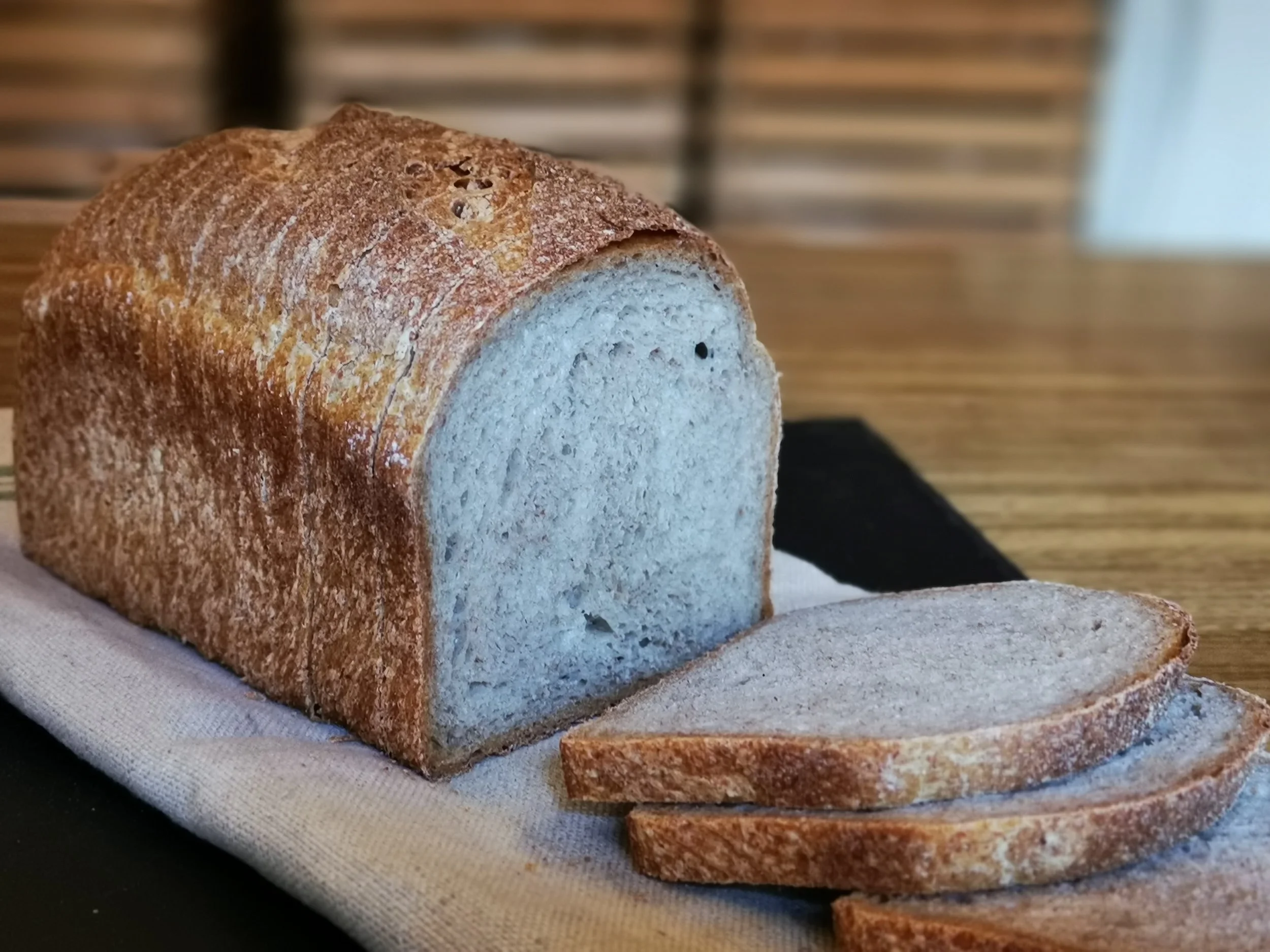
Our bread comes out of the oven around 8am. At that point it's alive in a specific sense — the interior is still around 95 to 98 degrees, steam is migrating from the crumb toward the crust, and the entire structure is in a state of flux. The fats haven't solidified. The starch network is still setting. The crumb — that beautiful open, alveolated interior full of irregular bubbles — is fragile in a way that isn't visible from the outside.
When a warm loaf goes through a bread slicing machine before it has rested, the saw blades meet a structure that cannot defend itself. The aggressive motion of the machine collapses the bubble walls that fermentation and baking spent hours creating. The cut pieces stick to each other. The crumb compresses rather than separates. What cools and solidifies in that state is dense, chewy, and flat — the opposite of what the bread was moments before.
This is not a machine calibration problem. It's a physics problem. The bread needs time to finish what the oven started.
By 10:30, approximately two and a half hours after coming out of the oven, the internal temperature has dropped sufficiently, the structure has set, and the loaf can be sliced cleanly. The alveoli hold their shape. The crust stays intact. The bread you take home is the bread we actually made. That's why the sign exists.
The Warm Bread in a Bag Problem
There's a related issue that compounds everything above.
When warm bread — sliced or unsliced — goes directly into a plastic bag, the residual heat creates condensation inside the bag. That trapped steam has nowhere to go. It settles back into the bread as surface moisture, softening the crust, creating the humid microenvironment that mold needs to establish itself, and accelerating staling from the outside in.
If you need to take your bread while it's still warm — which we understand, sometimes timing doesn't cooperate — ask for a paper bag. Paper breathes. It allows the steam to escape while protecting the loaf. It's not a perfect solution but it's vastly better than sealing warm bread in plastic.
The ideal scenario is always to let the bread cool completely on a surface with airflow before storing it. Completely — not warm to the touch, not slightly cool. Room temperature throughout. This takes longer than most people expect, usually a minimum of one hour for a full loaf. It's worth the wait.
Where to Store It Once It's Cool
This is where most people make their biggest mistake.
The fridge is the enemy of bread.
This is counterintuitive because we associate refrigeration with preservation. For most foods, that instinct is correct. For bread, it's exactly wrong. The temperature range inside a refrigerator — roughly 0 to 8 degrees Celsius — is the optimal range for a process called retrogradation, where starch molecules recrystallize and the bread goes stale. You are not slowing staling by refrigerating bread. You are accelerating it. A loaf that would stay good for three days at room temperature will taste stale in one day from the fridge. The texture becomes dry and the flavor flattens noticeably.
The wooden bread box is a traditional solution that works — until it doesn't. Over time, wooden boxes accumulate moisture and mold in their grain. That mold then transfers to every new loaf placed inside. If you use a wooden box, clean it regularly with white vinegar, which kills mold spores without leaving a chemical residue, and dry it completely before use. A neglected bread box does more harm than no box at all.
Plastic bags have their place but require care. A sealed plastic bag traps whatever moisture is present with the bread. In Lebanon's summer humidity, that can become a problem quickly. Keep bagged bread away from direct sunlight and heat sources — both will cause the bread to sweat inside the bag.
The method that works best is simple and requires nothing special: wrap the loaf in a clean kitchen towel, then place it inside a plastic bag. The towel absorbs surface moisture while the bag prevents the bread from drying out entirely. It sounds like an extra step. It makes a genuine difference.
What the Bread Itself Contributes to Its Own Longevity
Not all bread stales at the same rate, and the difference starts long before storage.
Real sourdough lasts significantly longer than commercial yeast bread. This isn't marketing. During long fermentation, the levain produces lactic and acetic acids that lower the bread's pH and create a naturally inhospitable environment for mold and spoilage. Studies in food science have documented real sourdough lasting three to five times longer than commercial yeast bread under identical storage conditions. The fermentation is doing preservation work that no additive can replicate.
Salt matters more than most people realize. Salt is hygroscopic — it manages moisture within the bread — and it inhibits microbial activity. We source our crystal sea salt from a traditional salt harvester in Anfeh, one of the last artisan salt producers working the ancient salt pans on Lebanon's northern coast. Bread with insufficient salt spoils faster. This is one reason traditional bread recipes don't compromise on salt levels regardless of current dietary trends.
Crust development is protective, not just aesthetic. A fully baked, well-developed crust acts as a barrier between the crumb and the outside environment. Underbaked bread has residual moisture in the crust that accelerates both mold growth and staling. The dark, crackling crust on a properly baked sourdough is functional. It is the bread protecting itself.
An intact loaf outlasts a cut one. Every cut surface is an exposed surface — open to air, oxidation, and moisture loss simultaneously. We always advise cutting at home as needed rather than slicing the entire loaf at once. If you prefer your bread pre-sliced, take what you need for the next two days and freeze the rest immediately. Slice before freezing so you can remove individual pieces without defrosting the whole loaf. Defrost at room temperature, never in a microwave.
Long fermentation extends freshness. The longer a bread naturally ferments, the longer it stays fresh. The organic acids produced during fermentation act as natural preservatives that no additive can replicate.
The Season Changes Everything
Lebanon's summer humidity is a genuine challenge for bread storage. High ambient moisture means mold spores have everything they need to establish themselves faster than usual. In July and August especially, bread that would last four days in cooler months may show mold in two.
Adjust your buying habits accordingly. Buy more frequently in summer. Store more carefully. And if you're not going to finish the loaf within two days, freeze it the day you buy it rather than watching it deteriorate on the counter.
The 10:30 rule, the paper bag, the kitchen towel, the room temperature rest — none of these are arbitrary. They're the accumulated knowledge of years of watching what happens when bread is treated well and what happens when it isn't.
We put a sign up because we got tired of explaining it one customer at a time.
Now you have the full explanation.
We Only Closed Two Days
We opened in 2015. We survived a revolution, a pandemic, Beirut port blast, an economic collapse and two wars. We closed for two days.
By Alain Bejjani, Bread and Salt Sourdough Cafe
─────────────────────────
It didn't start with bread.
It started with a question — why does everything we eat have ingredients we can't fully account for? Before Bread and Salt existed, before the bakery, before the farmers market, there was just an idea: food made slowly, ethically, entirely from scratch. Every element understood. Every ingredient justified.
Bread was supposed to be a small part of that idea. One ingredient among many.
Then I started researching it.
There were no trending articles to find, no Instagram accounts to follow. Sourdough in 2013 was not a lifestyle or a movement — it was an ancient method that had been largely forgotten in favor of faster, cheaper, more predictable alternatives. I found myself going deeper than search results could take me — books, monastery guides, ancient recipes, historical texts tracing bread back to its origins. The further I went, the more I understood that what most people called bread had quietly drifted very far from what bread had always been.
Somewhere in those months of research, bread stopped being a side note and became the entire story.
The history, the knowledge, the craftsmanship, the biology. And at the center of it all — the levain. A living organism that has to be fed every single day so that, in return, it will feed you. That idea — that reciprocal relationship between the baker and something alive — became an obsession I haven't recovered from since.
We started our mother starter in 2013. The first loaves were dense, humbling, and entirely ours.
The Farmers Market
By 2015, the idea had become a brand. Bread and Salt was ready to meet the world, and the world in question was Souk el Tayeb — Beirut's beloved farmers market. Getting in was its own challenge. There was already bread at the market. What we had to convince the organizers was that what we made was something categorically different.
It took follow-up calls and patient explanations, but we got our table.
The reactions that first day told us everything about where we were starting from. Some customers heard "sourdough" and thought we were saying Saida — bread from the south. Others couldn't understand how bread could rise without commercial yeast. A few Lebanese who had lived abroad recognized us immediately and approached the stand with the particular joy of finding something familiar in an unexpected place.
But the ones who tasted it — they understood without needing an explanation.
That taste. The depth of fermentation, the crust, the crumb, the way it stays with you. It doesn't need a pitch. It speaks for itself, and it always has.
In 2017 we opened the cafe on Charles Malek Avenue in Ashrafieh. A physical home for everything we had been building.
Then Lebanon Did What Lebanon Does
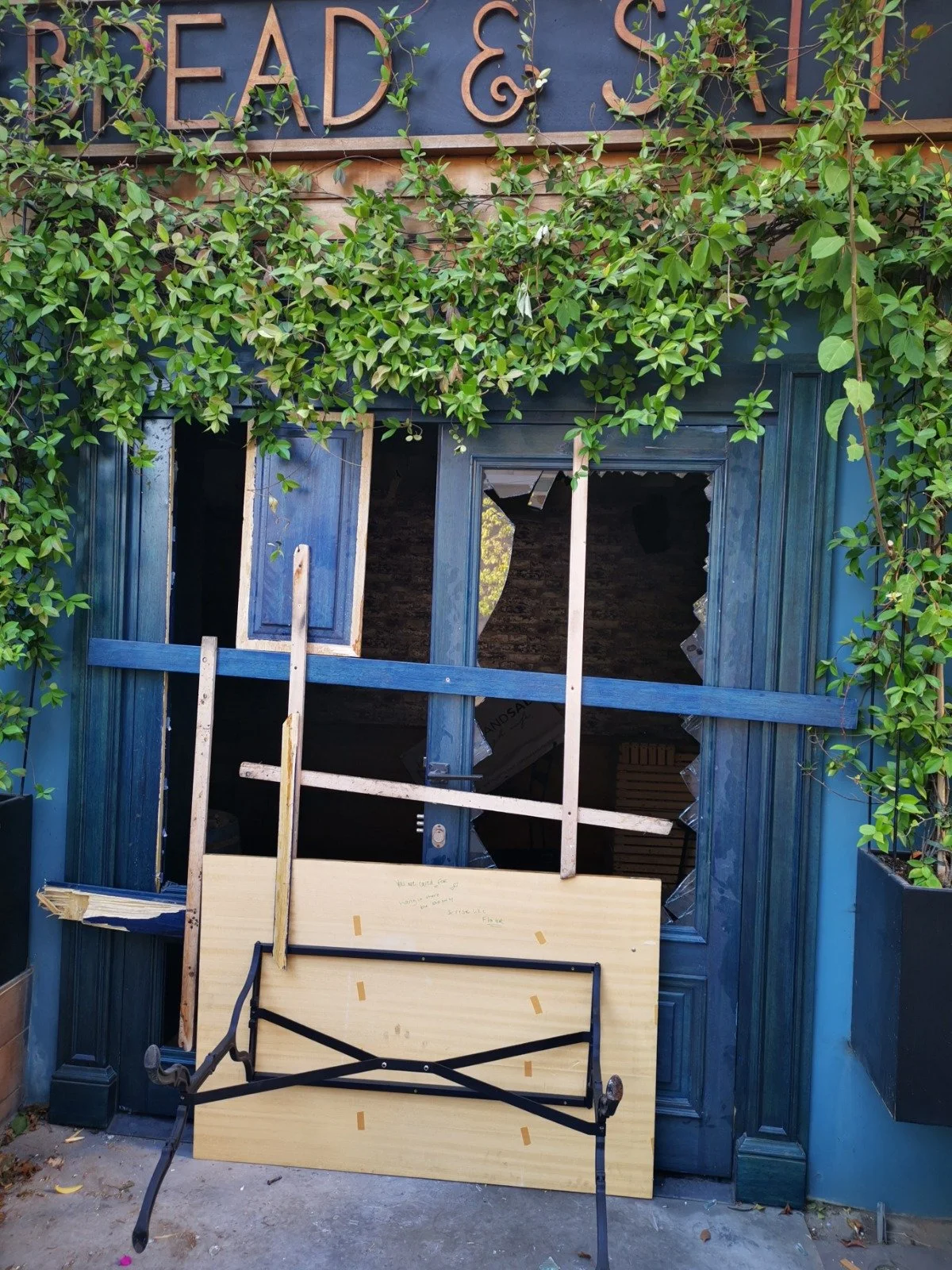
2019 brought the revolution. 2020 brought a pandemic. On August 4th, 2020, the port of Beirut exploded.
Our house was damaged. The bakery was damaged. Our car was gone. Carole and I were both injured. We spent weeks healing.
We closed for two days.
On the third day, bread was back on the shelves.
I don't say that to perform resilience. I say it because it's simply what happened, and because the starter needed feeding regardless of what the city looked like outside. The levain doesn't pause for catastrophe. Neither did we.
The economic collapse followed. Then another war. Then another.
Through all of it — the empty streets, the generator-dependent ovens, the currency that dissolved, the mornings when we didn't know if anyone would come — the bread kept being made the same way. Same starter. Same process. Same ingredients. No shortcuts introduced because times were hard. No commercial yeast quietly added to speed things up when speed would have helped.
Some standards aren't negotiable. That's the whole point of having them.
What Bread and Salt Actually Is
Bread and Salt is not a business we built to sell one day. It is not a concept or a brand exercise or a trend we caught at the right moment.
It is, as Carole and I have come to understand it, something closer to a child — nursed into existence in difficult conditions, with modest means and no safety net, and loved with the particular intensity that comes from choosing something not because you need it for money but because you need it for yourself.
The food we make is the food we eat. We are picky eaters. That has never changed.
Eleven years since the first starter. Ten years since the first loaf reached a stranger's hands at a farmers market. Everything Lebanon has thrown at us in between. The bread is still the same.